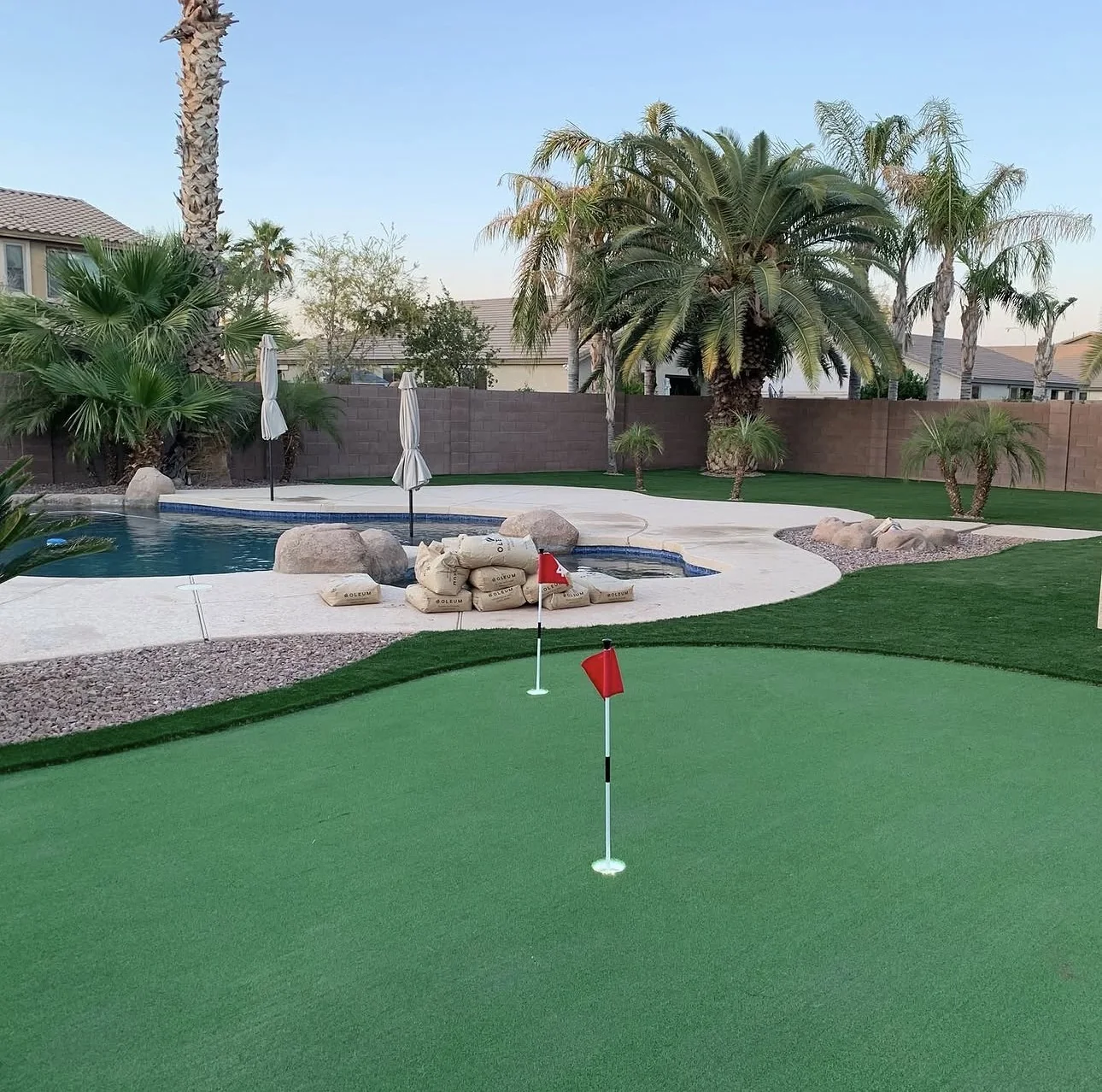
What a turf install includes
Most of the work in a turf project happens before the turf ever comes off the roll. A typical Celestia installation includes:
- Removal of existing grass, rock or soil to make room for the new base (removal is priced separately, with or without haul-off).
- Base preparation with compacted ¼-minus aggregate, graded so water moves off the surface and away from the house.
- Turf layout and seaming with the grain running the same direction so seams disappear.
- Nailing along perimeters and seams at close spacing so edges don't lift.
- Silica sand infill brushed in to support the blades and weigh the turf down. Antimicrobial infill is available for pet areas.
- Clean edges where turf meets pavers, curbing, rock or planters.
Choosing a turf weight
Face weight (ounces per square yard) is a rough guide to how dense and plush the turf feels. We carry options from about 61 oz for budget-friendly side yards, to 70 oz for general family use, up to 80–100+ oz for a fuller, premium look. Heavier isn't always better — pet runs, play areas and putting surfaces each have different needs, and we'll walk you through samples during the consultation.
Arizona conditions we plan for
Turf in the Valley has to handle surface temperatures that climb well above air temperature in summer, intense UV, monsoon downpours and clay or caliche soils that don't drain well. Grading, base depth and drainage are what keep a turf yard looking good after the first monsoon season. Where turf sits near west-facing windows or reflective glass, we'll point out heat and reflection concerns before you commit.
Pets and turf
For dog areas we discuss drainage, infill choice and how you'll rinse the area. Turf with pets needs periodic cleaning — see our turf cleaning and restoration service for what that involves.